Artificial Intelligence
A private AI platform that transforms years of AEC proposal data into an intelligent knowledge system, enabling teams to draft, analyze, and quality-check RFP responses 30-40% faster.
joist.ai



AEC marketing teams face the same frustrating cycle with every RFP deadline: They spend countless hours hunting and pecking through shared drives, multiple CRMs, and past proposals to find relevant content—essentially recreating the wheel for each response, even when similar work has been done before. Information remains siloed across offices, departments, and project management systems, while tight deadlines (30-40 hours per proposal) compound with multiple concurrent submissions. Quality risks multiply as content bounces between marketing, field teams, and subject matter experts. The result: teams have no time for strategy, spending their energy assembling content rather than crafting winning narratives.
Joist AI functions as a private ChatGPT trained exclusively on your firm's data. It reads through 3-5 years of proposals—processing 3,000+ documents in under 3 hours—then creates a searchable, conversational knowledge base organized around your people, projects, and companies. Instead of spending 70% of your time hunting for content, Joist delivers it instantly, then helps you draft, customize, and quality-check responses while your team focuses on strategy and creativity.
Joist serves Architecture, Engineering, and Construction firms across all sectors, focusing specifically on RFP/RFQ response and proposal development workflows. Secondary applications include marketing content creation, knowledge management, and business development enablement. The platform is particularly strong for public sector work (city, state, county, federal) with complex, detail-heavy requirements, while also proving effective for private sector letter proposals.
Pain point solved: "When did I last write this? What was that project called? Who updated the file last?"
How it works:
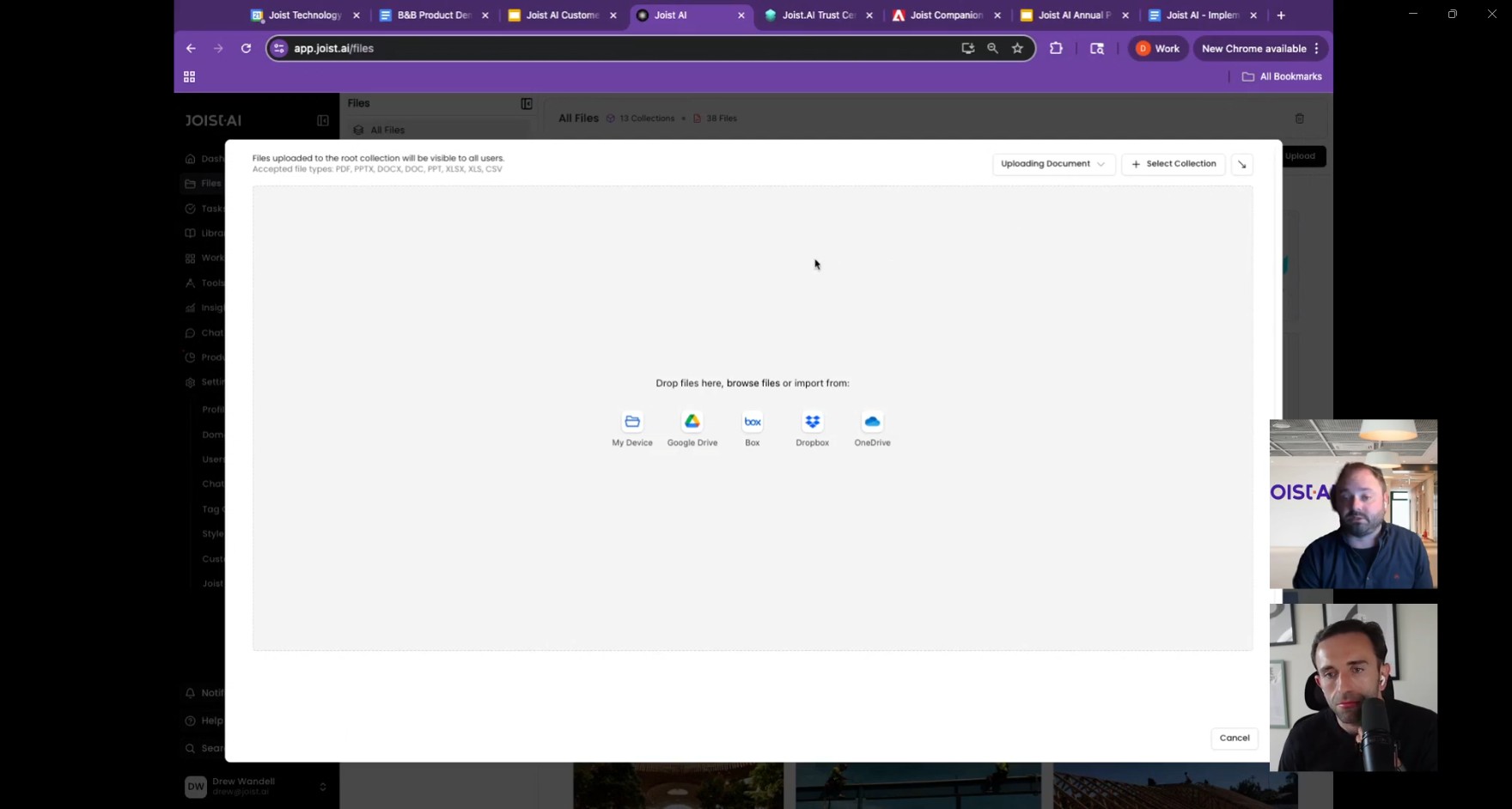
Joist's setup is remarkably simple: drag and drop 3-5 years of proposals, resumes, case studies, award submissions, and boilerplate copy—any text-based marketing content—into the platform. The system automatically annotates and classifies every page into distinct objects like cover letters, technical writeups, project descriptions, and bios, creating a Google-like search experience that drills down to the exact page, paragraph, and word you need. When Joist encounters a person's bio across multiple proposals, it intelligently groups them with their master resume, functioning as the opposite of traditional CRM systems where humans do the heavy lifting—here, AI handles the organization. The chat interface lets you ask natural questions like "When was the last time we worked on a hospital project in the Midwest under $50M?" and instantly receive answers with source documents.
Live interaction capabilities:
You can highlight old content and transform it with simple commands like "Make this 800 words," "Rewrite from first person to second person," or "Take old, make it new." The system pulls lookalike projects with AI-generated reasoning explaining their relevance and generates lists of past work filtered by region, cost range, market sector, or technical capability—putting your entire knowledge base at your fingertips in seconds.
Pain point solved: Massive RFPs with tight deadlines and complex requirements that require coordination across multiple teams
RFP Analysis capabilities:
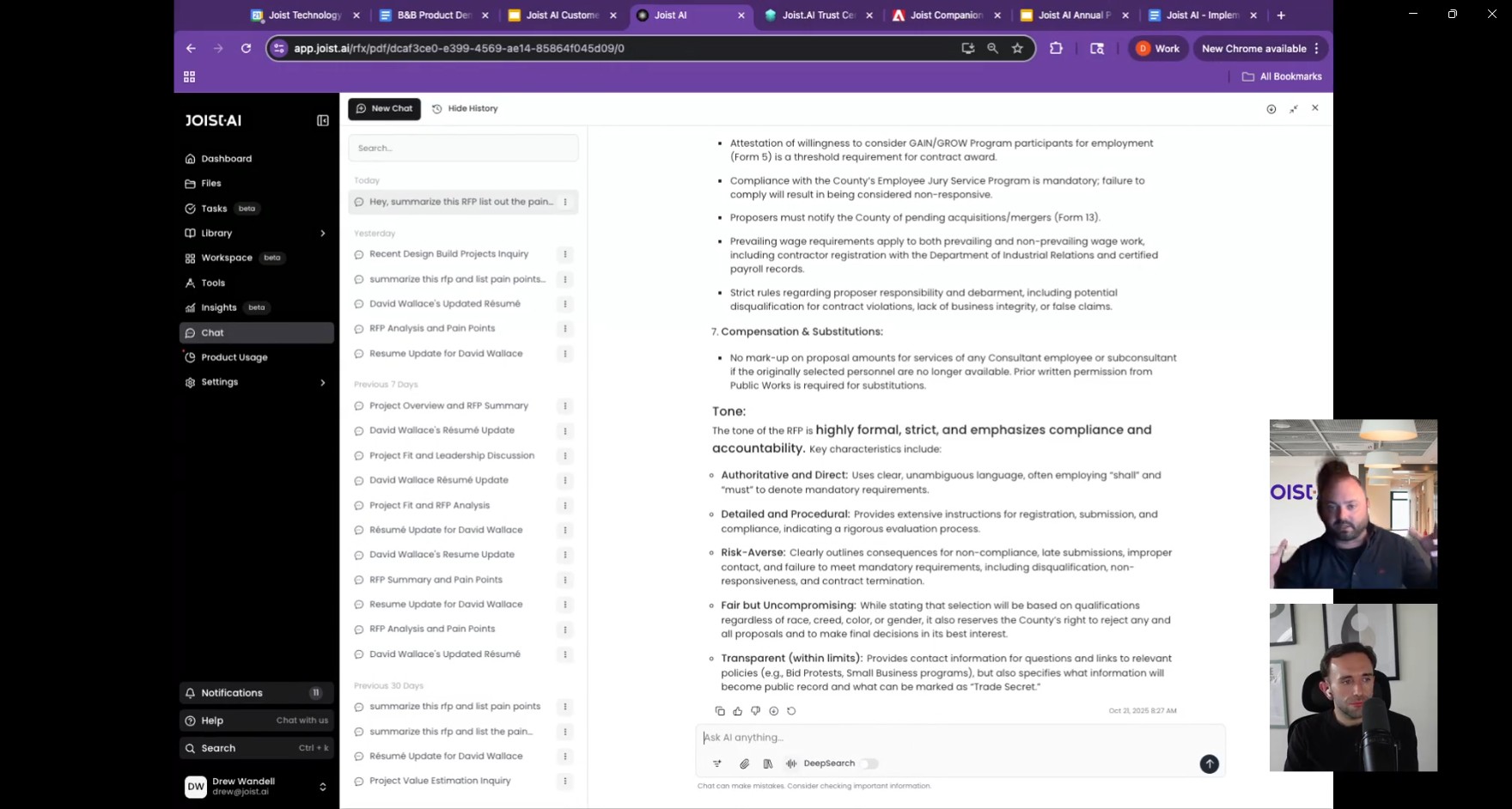
When you upload incoming RFPs of any size, Joist breaks them down within minutes, generating a comprehensive analysis that includes summary, scope, key dates, evaluation criteria, legal forms needed, and a technical proposal outline. The system automatically generates RFI questions by flagging conflicting information or unclear requirements, while identifying pain points through thematic analysis of what the client cares about most. It creates a compliance matrix to track requirements for final review and supports custom templates where you can upload your firm's go-no-go criteria, risk assessment frameworks, or legal review checklists to tailor the analysis to your specific workflow.
Smart Draft workflow:
Joist's smart draft workflow begins when you feed it the RFP along with optional go-by proposals, instructions, and addendums. The system builds a complete storyboard with over 100 micro-prompts—one for each section—allowing you to review and adjust the outline before generation so you maintain strategic control. Within minutes, it generates a 40-50% rough draft by pulling from your historical content and matching it to RFP requirements, while automatically recommending relevant past projects from your library with detailed reasoning for why they're appropriate fits.
Collaboration features:
Multiple team members across offices can work on the same draft simultaneously with real-time visibility into who's working on what section. A central dashboard tracks essential details like project title, client, market sector, submission date, and strategy notes, keeping everyone aligned.
Custom personas: Create different "voices" for public vs. private work, or by market sector.
Pain point solved: Errors slip through when content bounces between marketing, field teams, and designers under deadline pressure
Compliance checking:
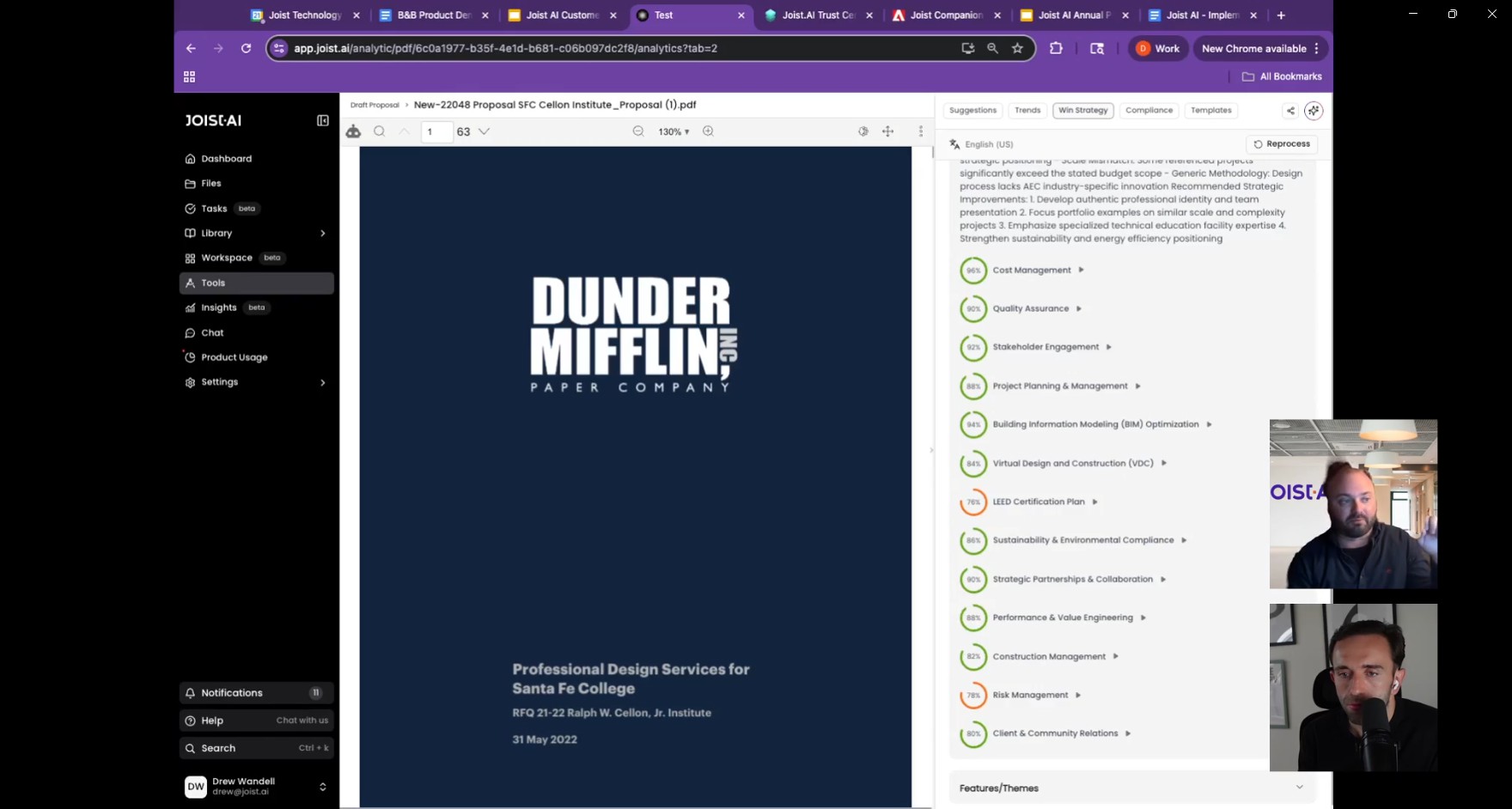
Joist's compliance checking matches your draft proposal to the original RFP to essentially "pre-grade your test" before submission. The system flags missing requirements like legal forms, mailing addresses, or unanswered questions, while rating each section with constructive feedback such as "8/10 on risk management—here's what's missing." This final safety net ensures you never submit a proposal that could be disqualified due to overlooked requirements.
Quality analysis:
Beyond compliance, Joist provides comprehensive quality analysis by detecting spelling and grammatical errors, assessing win strategy, and identifying firm differentiators throughout your proposal. It provides coherence ratings by section to ensure your narrative flows logically and offers cross-proposal benchmarking that compares how you addressed specific topics—like risk management or safety protocols—across the last six months, surfacing better examples from your own history that you can leverage for stronger responses.
Brand safety: Ensures responses stick to brand guidelines and writing style based on your historical content.
Joist AI serves architecture firms ranging from 30 to 10,000+ employees, engineering firms across all disciplines including civil, structural, MEP, and environmental, general contractors in the mid-to-large segment with $500M-$10B in annual revenue, and specialty contractors focusing on mechanical, electrical, and other trades. The platform scales from small teams with a single marketer to large enterprises with hundreds of proposal professionals across multiple offices.
.avif)

Primary market: United States
Emerging: Canada, Ireland, United Kingdom (early testing phase)
Joist directly transforms primary workflows including RFP responses, proposal assembly, quality assurance and compliance checking, knowledge management, and marketing content creation. Secondary workflows that benefit include business development research, new hire onboarding, cross-office consistency, client preparation, and strategic insights drawn from historical performance.
.avif)

.avif)


Document Review Efficiency: 30-40% time savings per proposal — Industry standard 30-40 hours reduced to 20-28 hours per RFP response.
Processing Speed: 3,000 proposals processed in under 3 hours — Same-day knowledge base setup from years of historical content.
Capacity Increase: 30-50% more proposals pursued without adding headcount — Marketing teams can handle more opportunities with existing resources.
Peace of Mind: Reduced deadline stress — Fewer late-night emergencies and burnout.
Standardization: Consistent quality across offices — Unified knowledge base and best practices.
Knowledge Retention: Faster onboarding (weeks vs. months) — Preserve organizational memory in searchable database.
$4 Million
Seed
Building Ventures
Leading Built Environment VC Firm
.avif)